Convenor: Name: Dr Sarah Njeri
Convenor: Email: sn42@soas.ac.uk
Outline: This module examines responses to conflict-related emergencies, grounded in an understanding of the power relations, systems, and processes that generate violence and shape responses to it. It provides essential skills for analysing humanitarian action through theories and case studies—capabilities central to effective policymaking and implementation in humanitarian contexts.
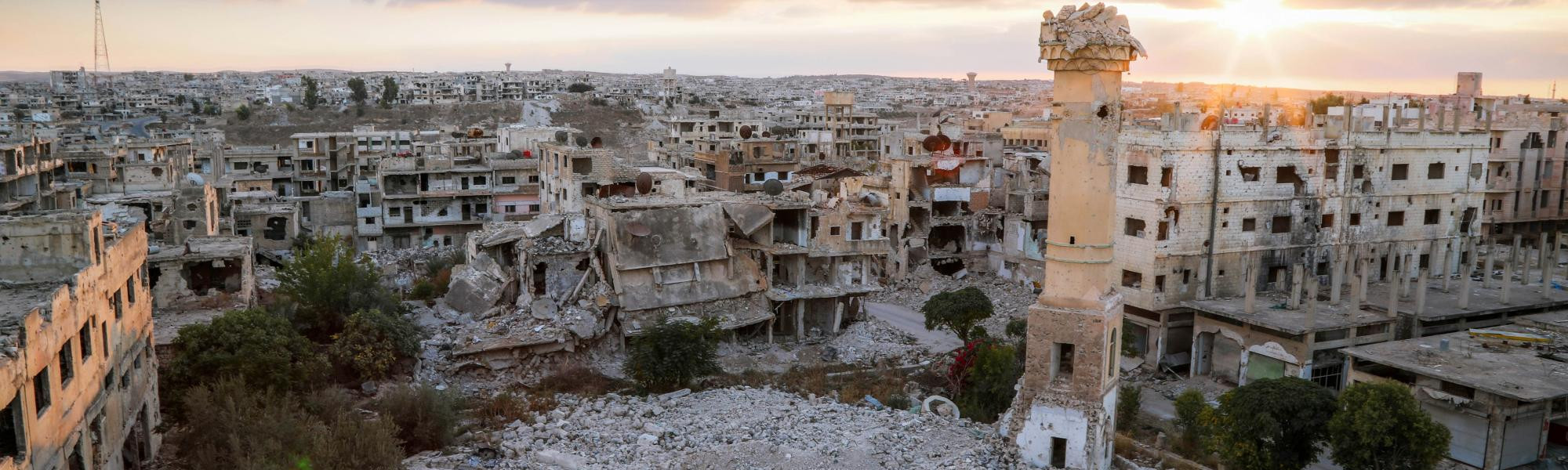
While humanitarian action has evolved over more than a century, recent events have fundamentally challenged how emergencies are identified and addressed. The wars in Palestine, Ukraine, Sudan, and Syria; heightened security risks for humanitarian workers; mass migration; and climate change have all reshaped the humanitarian landscape, demanding new approaches to crisis response.
This module focuses specifically on responses to crises stemming from war and violent conflict, exploring how lives are saved under difficult and often compromising conditions. The challenges of gaining access, providing assistance, and working with distressed populations intersect with broader development concerns, including the causes and manifestations of political violence, migration dynamics, gender considerations, civil society engagement, and security imperatives.
These interconnected topics appear throughout the module and can be explored in greater depth through your guided and open module selections. By examining both historical and contemporary cases, you will develop critical analytical tools for understanding humanitarian action in its full complexity—recognizing not only its life-saving potential but also the ethical dilemmas, practical constraints, and political dimensions that shape humanitarian work in conflict zones. This foundation prepares you to engage meaningfully with one of the most pressing challenges of our time: how to protect and assist vulnerable populations amid violence and crisis.
ILO1: Critically analyse the humanitarian action ecosystem by identifying key players, institutions, and contexts, and evaluate how Global South perspectives shape understandings of global challenges.
ILO2: Evaluate critically the evolution of humanitarian action by examining its historical foundations and analysing key turning points, ideological shifts, and contextual factors that have shaped contemporary humanitarian principles and practice.
ILO3: Compare and contrast core policy issues in humanitarian work at international and national levels by presenting key challenges and evaluating the effectiveness of proposed practical solutions across different operational contexts.
ILO4: Design inclusive, decolonial, and context-sensitive humanitarian strategies that centre justice, dignity, and local leadership, using theoretical frameworks, empirical data, and case study evidence from real-world operational challenges.
ILO5: Analyse the roles, mandates, and power dynamics among traditional, emerging, and local humanitarian actors.
ILO6: Critically appraise peers’ work using agreed academic criteria and deliver constructive, evidence-informed feedback that supports their learning and ongoing improvement.
Employability skills: This module will support the development of the following employability skills:
- Analytical and critical thinking
- Application of academic knowledge
- Application of theory to practice
- Communication (verbal) and presentation
- Communication (written and verbal) and communication of information
- Confidence and initiative
- Consultative skills
- Creative thinking
- Digital skills
- Empathy and integrity
- Interpersonal skills and relationship building
- Organisation and time management
- Presentation skills
- Questioning
- Reflective and responsive to feedback
- Research
- Synthesis and evaluation
Session dates: 2026/27 Semester 1
Week 1 start: 21/09/2026
Week 1 end: 27/09/2026
Week 1 live session: 23/09/2026 13:00–15:00
Week 2 start: 28/09/2026
Week 2 end: 04/10/2026
Week 2 live session: –
Week 3 start: 05/10/2026
Week 3 end: 11/10/2026
Week 3 live session: 07/10/2026 13:00–14:00
Week 4 start: 12/10/2026
Week 4 end: 18/10/2026
Week 4 live session: –
Week 5 start: 19/10/2026
Week 5 end: 25/10/2026
Week 5 live session: 21/10/2026 13:00–14:00
Week 6 start: 26/10/2026
Week 6 end: 01/11/2026
Week 6 live session: –
Week 7 start: 02/11/2026
Week 7 end: 08/11/2026
Week 7 live session: –
Week 8 start: 09/11/2026
Week 8 end: 15/11/2026
Week 8 live session: –
Week 9 start: 16/11/2026
Week 9 end: 22/11/2026
Week 9 live session: 18/11/2026
Week 10 start: 23/11/2026
Week 10 end: 29/11/2026
Week 10 live session: –
Week 11 start: 30/11/2026
Week 11 end: 06/12/2026
Week 11 live session: 02/12/2026
Week 12 start: 07/12/2026
Week 12 end: 13/12/2026
Week 12 live session: –
Week 13 start: 04/01/2027
Week 13 end: 10/01/2027
Week 13 live session: –
Week 14 start: 11/01/2027
Week 14 end: 17/01/2027
Week 14 live session: –
Staff member 01: Name: Dr Sarah Njeri
Staff member 01: Email: sn42@soas.ac.uk
Staff member 01: Module role: Module convenor
Staff member 01: Positions: Lecturer in Humanitarian and Development Studies
Staff member 01: Department: Department of Development Studies
Staff member 01: Link: https://www.soas.ac.uk/about/sarah-njeri
Staff member 01: Profile picture: 
Group 1: Name: Assignment 1 (AS1)
Group 2: Name: Assignment 2 (AS2)
Assessment A: Group number: 1
Assessment A: Name: Part 1: Recorded presentation
Assessment A: Weighting (%): –
Assessment A: Week due: 5
Assessment A: Due date: 23/10/2026
Assessment A: Permitted AI usage: –
Assessment B: Group number: 1
Assessment B: Name: Part 2: Peer feedback
Assessment B: Weighting (%): –
Assessment B: Week due: 6
Assessment B: Due date: 30/10/2026
Assessment B: Permitted AI usage: –
Assessment C: Group number: 1
Assessment C: Name: Submission: Recorded presentation and peer feedback
Assessment C: Weighting (%): 30%
Assessment C: Week due: 7
Assessment C: Due date: 06/11/2026
Assessment C: Permitted AI usage: Editing;Retrieval
Assessment D: Group number: 2
Assessment D: Name: Patch 1: Mini literature brief
Assessment D: Weighting (%): –
Assessment D: Week due: 2
Assessment D: Due date: 02/10/2026
Assessment D: Permitted AI usage: –
Assessment E: Group number: 2
Assessment E: Name: Patch 2A: Critical commentary
Assessment E: Weighting (%): –
Assessment E: Week due: 8
Assessment E: Date due: 13/11/2026
Assessment E: Permitted AI usage: –
Assessment F: Group number: 2
Assessment F: Name: Patch 2B: Peer-review of critical commentary
Assessment F: Weighting (%): –
Assessment F: Week due: 9
Assessment F: Date due: 20/11/2026
Assessment F: Permitted AI usage: –
Assessment G: Group number: 2
Assessment G: Name: Patch 3: Conceptual map
Assessment G: Weighting (%): –
Assessment G: Week due: 10
Assessment G: Date due: 27/11/2026
Assessment G: Permitted AI usage: –
Assessment H: Group number: 2
Assessment H: Name: Submission: Patches 1, 2, 3 and Integrative stitch
Assessment H: Weighting (%): 70%
Assessment H: Week due: 14
Assessment H: Date due: 15/01/2027
Assessment H: Permitted AI usage: Editing;Retrieval
Live session 1: URL: https://teams.microsoft.com/l/message/19:GVUr76L9sghPnzjhcqoCn28ppaQpBlKZ8E2G7eT-bLs1@thread.tacv2/1789985499149?tenantId=674dd0a1-ae62-42c7-a39f-69ee199537a8&groupId=24b6bd7f-13ae-46d3-9a7b-566763b25090&parentMessageId=1789985499149&teamName=TAL-Humanitarian%20Principles%20and%20Practice%20A26%2F27%20(DEV7541)&channelName=General&createdTime=1789985499149
Live session 3: URL: https://teams.microsoft.com/meet/3105203760741404?p=KqDYNQRijT0KEqAMgH
Live session 5: URL: https://teams.microsoft.com/meet/3487865969814539?p=Nvk6oCFNvHMk4NdZIv
Course template: template--pg-module